

Team
We work in tight interdisciplinary teams, each focused on a single goal at a time.
We try to expand our modeling capabilities incrementally with each release: every model attempts something new while building on accumulated knowledge from previous systems. This philosophy was partly inspired by discussions around how the Apollo program expanded capabilities incrementally rather than attempting the full problem at once.
All groups operate as interdisciplinary units working toward a single focused objective. We try to minimize fragmentation of attention and maximize iteration speed. Collaborations allow us to collectively explore a much broader range of ideas and research directions than any single team could pursue alone. We are therefore excited to support ambitious computational biology “moonshots” from the community, especially when aligned with our current Open Problems.
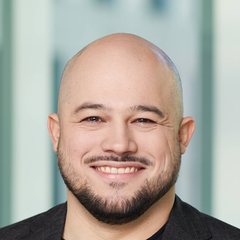 Kristof Szalay, CTO
 Groups
Drug Combination Group
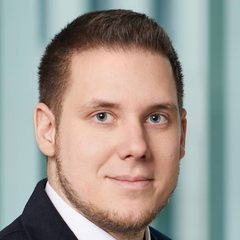 Robert Sipos
  Dana Zemel
  Kristof Galambos
  Murat Cem Kose
 We optimize models for drug combinations to predict possible synergies in a vast search space. Predicting synergy is a much more difficult task compared to predicting responses for mono treatments due to the dramatically worse signal-to-noise ratio. This also makes data harmonization exceptionally important.
Another focus of our group is modeling advanced modalities, like antibody-drug conjugates (ADCs) or degraders like PROTACs. Utilized in Turbine's current ADC product, we developed solutions to match antibodies with the best payload for a given indication.
In vivo Biology Group
 Imre Gaspar
  Valér Kaszas
  Balint Pfliegel
  Lucie Studena
 In vivo data is as scarce as it is expensive to generate. The In vivo Biology Group focuses on the transfer learning problem of using in vitro perturbation data (CRISPR, small molecule, etc., mainly from HT screens) to build in vivo predictive ML/AI models. Our approach is to harmonize different biosample domains through decomposition and in-model resynthesis that allows the model to learn from sample similarities while still being capable of distinguishing between the in vivo and in vitro domains.
Multimodal Learning Group
 Laszlo Mero
 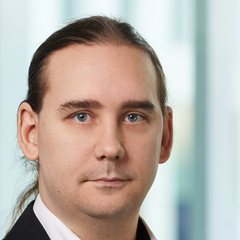 Csaba Gor
 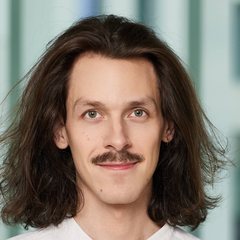 Milan Sztilkovics
 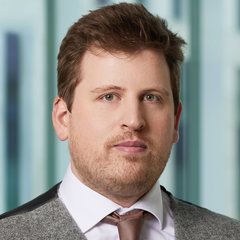 Zsolt Gyüre
 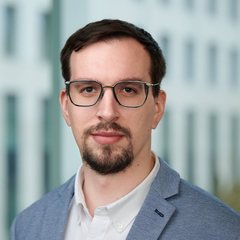 Alex Sliz-Nagy
 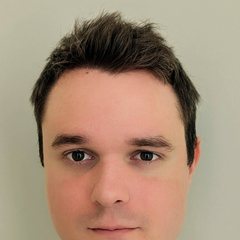 Peter Frendl
 In vitro data is diverse with multiple perturbation modalities and many possible endpoint measurements. We focus on enabling models to learn the underlying biology with high fidelity by combining datasets from different modalities. Our current project is creating a model for target discovery that combines CRISPR screens, PerturbSeq screens and drug modifier CRISPR data.
Beyond Oncology Group
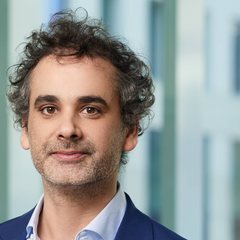 Bence Szalai
 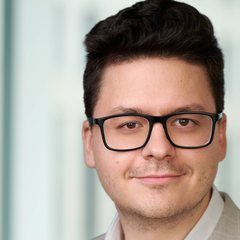 Bence Czako
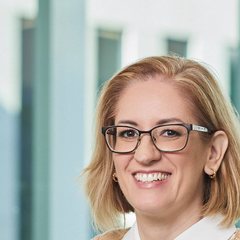 Gema Sanz
 Gerold Csendes
 The Beyond Oncology Group specializes in applying virtual assay capabilities to new therapeutic areas beyond oncology, with a particular focus on immune system.
Our work is grounded in the idea that (perturbation) RNA-seq - bulk, single-cell, and spatial - provides a robust, scalable representation of cellular state, even outside traditional oncology settings. This approach is reflected in our participation in the Virtual Cell Challenge, where our "Mean Predictors" team achieved top-tier performance.
Ecosystem
Our best work is only possible within the broader ecosystem of Turbine.
We'd like to acknowledge the work of related Turbine teams without whom our work would not be possible:
- Lab for generating valuable data that cannot be found anywhere else
- Engineering for providing us with the data and compute infrastructure
- Product and partnership teams for keeping our work grounded in real-life applications
- Marketing for helping us communicate our ideas
- and support teams for helping us keep the teams healthy.
Thank you for providing the psychological and institutional safety that allows us to move quickly and speak honestly about our limitations and failures.